
Supplement delivery formats in 2026: capsules, gummies, powders, sachets and what’s next
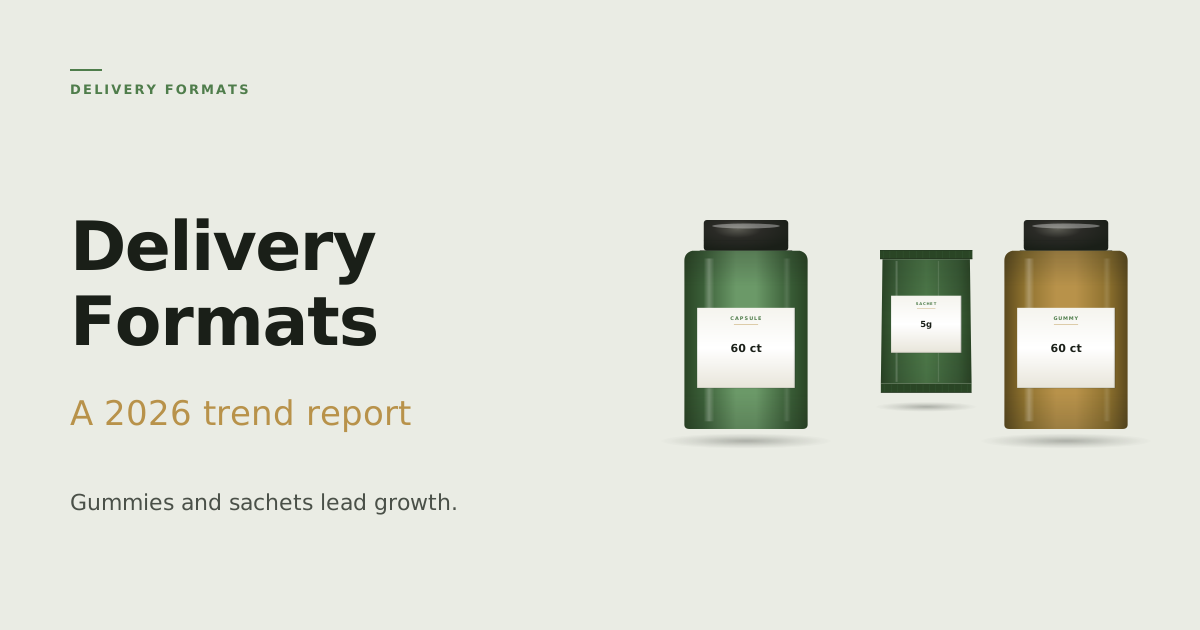
The format you choose for a supplement shapes everything downstream: the active ingredients you can include, the doses you can achieve, the consumer experience, the regulatory complexity, and the unit economics. Format decisions made early in product development are expensive to reverse. This report covers the established formats, the fast-growing ones, what the data says about bioavailability, and how to match format to audience and channel.
Established formats
Capsules
Capsules remain the most versatile format in the supplement industry. They accommodate a wide range of actives — powders, oils, granules — with minimal interaction between ingredients. Hard-shell capsules are available in vegetarian (HPMC) and vegan formulations as standard, which matters increasingly for EU consumers. Vegan compatibility is no longer a premium feature; it is a baseline expectation in most categories.
Capsules handle sensitive actives well: ingredients that degrade in the presence of moisture, light, or oxygen can be protected by selecting appropriate shell materials or adding desiccants. They also allow enteric coating to protect actives through the stomach and release in the intestine — relevant for probiotics, enzymes, and certain minerals. Minimum order quantities for capsule products are typically the lowest of any format, making them accessible for early-stage brands.
Tablets
Tablets offer the highest active ingredient density per unit volume. When dose requirements are high and capsule count per serving would otherwise reach four or five, tablets become the practical option. They are also the lowest cost-per-unit format at scale — the manufacturing process is highly automated and raw material wastage is minimal.
The tradeoffs are real: tablets require excipients (binders, fillers, lubricants) that add label complexity, they are harder to swallow for some consumers, and not all actives can withstand the compression forces used in tableting. For brands targeting clinical positioning or high-dose mineral formulas, tablets remain the format of choice. For brands targeting lifestyle or D2C audiences, capsules are usually preferred.
Powders
Powders allow the highest absolute doses of any format — essential for protein, creatine, collagen, and greens products where effective doses are measured in grams rather than milligrams. They also allow flexible serving sizes, which is useful when optimal dosing varies by body weight or use case.
The consumer experience is a strength and a risk. Powders that mix cleanly, taste good, and dissolve without clumping drive repeat purchase. Powders that separate, foam, or taste medicinal drive churn. The sensory development work for powder products is more intensive than for capsules or tablets. Flavor and texture formulation requires dedicated expertise and multiple iterations.
Soft gels
Soft gelatin capsules are the format of choice for fat-soluble actives — omega-3s, vitamin D, vitamin K, coenzyme Q10, and oil-based botanical extracts. The sealed liquid fill provides better oxidation protection than hard capsules for oil-based ingredients, and the soft gel shell is often better tolerated by consumers who struggle with hard capsules. The manufacturing process is specialized and minimum order quantities are higher than for hard capsules. Vegan soft gels (starch or carrageenan-based shells) are available but add cost and have more limited compatibility with certain fills.
Fast-growing formats
Gummies
Gummies are the fastest-growing format in the global supplement market. The growth is driven by consumer preference, not formulation advantage: gummies taste good, feel like a reward rather than a chore, and generate strong repeat purchase driven by habit rather than necessity. The format has expanded well beyond vitamins and minerals into adaptogens, probiotics, collagen, and sleep supplements.
The formulation constraints are significant. Gummies cannot accommodate high doses — a standard gummy delivers 2–5g of product, limiting active ingredient amounts. Heat-sensitive actives (certain probiotics, some vitamins) degrade during the gummy manufacturing process. Sugar and sugar alcohols add label complexity for calorie-conscious consumers. Sugar-free gummies using alternative sweeteners often have texture or taste trade-offs that require careful sensory development.
The economics are the most challenging of any mainstream format. Gummies cost 2–3x more to manufacture than equivalent capsule products, require specialized equipment, and have a shorter shelf life. However, they command 30–40% higher retail prices, and consumer compliance (taking the supplement consistently) is measurably higher than for capsules or tablets. The net unit economics are positive for brands who can support the higher retail price in their channel.
Sachets
Single-serve sachets — small pouches containing a pre-measured powder dose — are growing fast in the premium and functional nutrition segments. The format signals portion control and convenience, which resonates with consumers who prefer not to measure or scoop. Sachets perform well in premium retail and DTC subscription channels, where the unboxing experience and perceived precision of single-serve dosing justify a higher price per serving.
From a formulation perspective, sachets share the advantages of powders: high dose capacity, flexible ingredient formats, and broad active compatibility. The packaging cost per unit is higher than bulk powder in a jar, but the premium positioning and reduced consumer friction often offset this at the right price point. Sachets are also a common format for B2B supplement samples, where the portability and controlled dose matter.
Liquid shots
Liquid shots — typically 30–60ml single-serve bottles — are positioned on bioavailability claims. The argument is that liquid-phase actives are absorbed faster and more completely than solid-dose forms, which is true for some ingredients but overstated for others. For brands where rapid onset is genuinely part of the product promise (pre-workout, energy, acute sleep support), the format claim is supportable and differentiating. For brands where the claim is more marketing than mechanism, liquid shots add cost without adding clinical credibility.
Manufacturing complexity is higher than powders or capsules: liquid products require preservation systems, specific packaging materials, cold chain considerations for certain actives, and more complex stability testing. Shelf life is typically shorter. Minimum order quantities are often higher. The format makes sense when it is matched to a genuine functional claim and a channel that supports the price premium.
Novel formats
Effervescent sticks
Slim-format effervescent powders in stick packs combine the convenience of sachets with the experience of a fizzy drink. The format is growing in the sports, hydration, and energy categories. The effervescent reaction during dissolution can mask bitter tastes and creates a sensory experience that consumers associate with refreshment. Active dose limits are similar to sachets. The packaging format is distinctive on shelf and in subscription boxes.
Sublingual strips
Orally dissolving strips — thin films placed under the tongue — deliver actives directly to the bloodstream bypassing first-pass metabolism. Genuinely relevant for actives with poor oral bioavailability (certain cannabinoids, melatonin, some B vitamins). The format is novel enough to command attention and premium pricing, but manufacturing is specialized, minimum orders are high, and not all actives are stable in the strip matrix. Currently a niche format but with real growth in sleep, focus, and recovery categories.
Bioavailability differences
Format affects how much of an active ingredient actually reaches circulation. The differences are meaningful but frequently overstated in marketing. Key principles:
- Liquid-phase actives are generally absorbed faster than solid-dose forms, but peak absorption difference is often 15–30 minutes — relevant for acute-effect products, less relevant for chronic supplementation.
- Fat-soluble actives (vitamins A, D, E, K, CoQ10, curcumin) benefit from lipid co-administration. Soft gels with oil fills deliver better bioavailability than encapsulated dry powder for these ingredients. Taking a dry capsule of vitamin D with a meal containing fat achieves similar outcomes.
- Mineral bioavailability depends on salt form, not format. Magnesium glycinate in a capsule has higher bioavailability than magnesium oxide in any format. Choosing the right salt form matters more than choosing the format for mineral products.
- Enteric-coated formats protect actives through the stomach — relevant for probiotics, enzymes, and actives that degrade at low pH. This is a genuine bioavailability advantage that merits the cost premium for relevant ingredients.
- Gummies often underdeliver on labeled doses due to active migration into the gummy matrix and degradation during the high-temperature manufacturing process. This is a known manufacturing challenge, not a universal problem, but it requires careful stability and potency testing.
Consumer preferences
Consumer research across EU markets in 2025 identifies three consistent preference signals:
- Vegan compatibility is table stakes. HPMC (vegetarian) capsules are now the default expectation in most categories. Gelatin capsules require justification (typically cost or soft gel fill requirements). Brands launching with gelatin capsules in categories where vegan options are available are choosing a positioning liability.
- Convenience beats clinical for most consumers. Formats that are easy to take, require no preparation, and integrate into existing routines drive higher compliance than formats with demonstrated bioavailability advantages. Gummies and capsules outperform tablets and powders on compliance metrics across consumer segments, with the exception of sports nutrition, where powder is the established norm.
- Sensory experience is a retention driver. Gummies and flavored powders that genuinely taste good generate subscription retention rates 15–25% higher than unflavored or poorly formulated equivalents. Sensory investment — flavor, texture, dissolution behavior — pays back in LTV, not just acquisition.
Manufacturing economics
Format choice has direct and significant cost implications. Approximate cost benchmarks for EU-manufactured products at 10,000-unit minimum orders:
- Capsules: index at 1.0 (baseline). Most cost-efficient format for multi-ingredient formulas.
- Tablets: index at 0.8–0.9 at scale. Lower per-unit cost than capsules due to manufacturing automation, but tooling costs for new formulas add upfront investment.
- Powders (bulk jar): index at 0.7–0.85, depending on active ingredients and flavoring complexity. Cost-efficient at volume.
- Sachets: index at 1.4–1.8 versus capsules. Packaging cost is the main driver. Justified by premium retail positioning.
- Gummies: index at 2.0–3.0 versus capsules. Highest manufacturing cost of any mainstream format. Supported by 30–40% higher retail prices in most categories.
- Soft gels: index at 1.2–1.5. Higher than hard capsules due to specialized equipment, but lower than gummies.
- Liquid shots: index at 2.5–4.0. Packaging, preservation, and stability costs are the drivers.
How to choose the right format
Three questions determine format selection:
Match format to active
Some actives dictate format. Fat-soluble vitamins: soft gels or lipid-enhanced capsules. High gram-dose actives (collagen, protein, creatine): powder. Actives with poor GI tolerance or low stomach acid stability: enteric-coated capsule or tablet. Everything else: capsules first, then consider the audience and channel.
Match format to audience
Lifestyle and wellness consumers trend toward gummies, sachets, and flavored powders. Performance athletes trend toward powders and capsules. Clinical and therapeutic positioning trends toward capsules and tablets. Older consumers often prefer smaller-format capsules or tablets over large tablets. Gen Z consumers show higher format experimentation — strips, shots, novel formats — than any other demographic.
Match format to channel
Pharmacy and clinical retail channels favor capsules and tablets: they signal efficacy and scientific credibility. Premium lifestyle retail and DTC channels support gummies, sachets, and novel formats: they signal experience and convenience. Marketplace channels (Amazon, etc.) are format-agnostic but reward lower price points, which tends to favor capsules and tablets economically. Subscription DTC is where gummies and sachets show the strongest retention performance relative to their cost premium.
Quick FAQ
Are gummies as effective as capsules for the same ingredients?
For most ingredients at standard doses, yes — if the formula is properly manufactured and stability-tested. The risks are active degradation during the high-temperature gummy production process and active migration into the gummy matrix over time. Reputable manufacturers validate potency at end of shelf life, not just at production. Ask for stability data that confirms labeled potency is maintained throughout the stated best-before period. For heat-sensitive actives (certain probiotics, vitamin C at high doses), gummies are a technically inferior format regardless of manufacturer quality.
Why do gummies cost so much more to manufacture?
Three factors: specialized equipment (gummy depositing lines are expensive and require dedicated production time), higher raw material input per active dose (the gummy base — pectin or gelatin, sugar or sugar alcohols, colors, flavors — adds significant material cost beyond the actives), and shorter production runs due to flavor and color changeovers. These costs are real and largely unavoidable. Brands entering the gummy format should model unit economics carefully before committing — the retail price premium needs to cover a significantly higher COGS.
What is the minimum order quantity for gummies?
Typically 10,000–50,000 units for standard gummy products from EU manufacturers, depending on the manufacturer's minimum batch size and whether you are using a shared formula or a custom one. Some manufacturers offer lower MOQs for white-label gummy products. Custom flavor and color combinations usually require higher minimums because they cannot be blended with other clients' runs.
Can I switch formats after launch without reformulating?
Format transfers are possible but almost never trivial. Moving a capsule formula to gummies or tablets requires a complete reformulation — the excipients, processing conditions, and ingredient interactions are different for every format. A powder-to-sachet transfer is closer to a packaging change than a reformulation, but still requires stability data for the new format. Budget 2–4 months and EUR 10,000–40,000 for a competent format transfer, depending on complexity and the target format.
Which format is best for a first product?
Capsules. They offer the broadest ingredient compatibility, the lowest minimum order quantities, the shortest time-to-market, and the easiest path to custom formulation if you outgrow a white-label formula. The vegan HPMC capsule is the default starting point for any supplement category that does not have a format-specific reason to choose otherwise. Once you have validated demand and have the economics to support it, gummies, sachets, or novel formats can be a second or third SKU decision — informed by real customer feedback rather than speculation.
Browse products by format.
Explore capsules, gummies, powders, sachets, and more in the platform catalog. Or book a call to discuss which format fits your product and audience.